Showing posts with label Notes. Show all posts

12 January 2012

Britart movement 1990s

Britart movement 1990’s:
Brit Art was a movement that began in Great Britain during the 90’s that gained international recognition and acknowledgement. The movement was called YBA (Young British Artists) who exhibited together in warehouses and factories. There form of art was mostly about creating controversial art that made people think about things – maybe demystifying objects and reintroducing them in a complete new concept of art. One of the most famous artist from the YBA is Damien Hirst known for his series of dead animals (sheep as well as a tiger and a cow) that were preserved and exhibited as an obvious symbol for death. Hirst’s work mostly revolved around the subject death and is preliminary seen in all his exhibitions and installations. He isn’t just known for his art pieces but also for his inappropriate comment about September 11 with congratulating the terrorist organisation to showing everybody that America is vulnerable – he regretted his comment a year later and apologised to the world. An interesting fact about Damien Hirst might be that he first got rejected from Art College but after taking a Foundation Diploma course he studied Arts at the Leeds College of Arts, he also studied at Goldsmiths, University of London where he studied Fine Arts.
His first famous piece that got known worldwide was when he first exhibited at a warehouse exhibition and displayed a shark that was preserved in formaldehyde – hanging in a vitrine. Some of his art was called to “disgusting” and controversial that the New York health officials banned some of his work and it wasn’t shown in New York. Damien Hirst seems to have had and still has a liking for showing dead animals preserved and displayed in different ways – there was an art piece entitled Mother and Child Divided and the art piece actually consisted of a cow and a calf cut into different pieces and displayed in different cabinets. He also had an art piece where he showed rotting animals.
The YBA was also knows for its shock art and its sometimes rather “disgusting” exhibitions. On the other hand the YBA artists showed a boldness that had never been there before in art – it was about shocking people and there seemed to have been no limits in what is okay to create and when art is not art anymore because of its subject. 

09 January 2012

Visiting a museum for Modern Art: MARTa

Yesterday I went to visit a Modern Art Museum close to where I live. I’ve heard a lot about it in the past and my art teacher from school always wanted us to go but I never wanted to because I haven’t been the biggest fan of modern art so far, but after reading about more of it during the projects I felt like it was a good time to break this cycle of not going to modern art museums and I went. There were three different exhibitions in the museum and it was definitely an interesting experience. I knew that the architecture of the building would be a very interesting thing to look at in itself without having seen any of the exhibits inside. And it was just like that. The entrance was very impressive and the whole building had a great dynamic.


The roof was build in different shapes and forms flowing out of the building and it didn’t only make the outside  much  more engaging but the inside with most of the light entering through windows in the roof.

                   Image from                                                                                                                     http://www.aknw.de/presse/downloads/tag-der-architektur2009/bilder-gross/Herford_1331_MARTa.jpg (Accessed 9 Jan 2012)

The first exhibition was called “Personal map (to be continued)...” by Nezaket Ekici and it consisted of different installations, a lot of them were video installations with music that the visitor could listen to, photographs and material that played a role in making her art as well as one piece of actual “live” art. While I was looking at her art I came up with a few questions and there are a few things that I really wonder about. Her art involved lots of physical action e.g. being completely dressed in white and then lighting candles that are stuck to a plate on the ceiling and the standing underneath it waiting for the hot wax to drop on her body – I am not sure what that specific art piece was trying to express and I read about it in the book that was supposed to explain the reasons for this art piece but unfortunately I couldn’t figure out why she did it – and to be quite honest to me it looked more like self destructive behaviour and if that is what makes modern art modern art then people shouldn’t pay for going to art museum and rather join volunteering work at a psychiatric institution and they would probably see as much self destructive behaviour as I felt I have seen in the exhibits yesterday.

Maybe it’s only modern art that is displayed in Germany that is so stereotypical for what I think about modern art as it was the main influence about modern art that I had in the past so far – said this – I still wonder why modern art seems to need to be disgusting, shocking and disturbing to be recognised and exhibited. Everybody is complaining about the world and how “ugly” and destructive it became and I wonder why art doesn’t want to be opposite to that statement and why artists don’t just create something more light-hearted and more positive – I am not saying that all modern art has to be depressing but from what I’ve experienced it is pretty much just like that. And about some works of art I wonder who would really like looking at it – do the artists from today even work from their heart or if the art is really a mirror to their soul – are they all just depressed black holes in a big universe?

People who are visiting modern art museum in Germany also seem to follow some kind of stereotypical role model – the majority of these people is dressed in black, flat shoes, short hair, colourful reading glasses, the same facial expression trying to force an interesting look on their face. I have noticed all these tiny details and I wonder if that is a resemblance of the people the artists wants to reach out to with his or her work. Why do these people resonate with this kind of modern art?

I really hope that not all modern art is like this and that there is more to this generation of artists because I think what the world needs is not more depressing art and black holes in the universe we rather need positive feelings expressed and more stars added to the universe and the night sky. 

05 January 2012

Notes

I was just researching works of art for the exercise that I did yesterday but wasn’t satisfied with and it is fun so far – I designed my own ground plan and it is much easier this way. I found this amazing sculpture artist – his name is Ron Mueck and his sculptures are over life size sculptures of heads, bodies in different situations –very inspiring!
Ron Mueck Seated Boy

04 January 2012

Project 1 Exercise: Exploring modern art

Project 1 Exercise: Exploring modern art

Surrealism:

-          Began in 1920s
-          Surprise and unexpected ways of presenting a subject
-          Developed form Dadaism
-          Wanted to free people from false rationality
-          Dream analysis was a bag part of the movement – believed that dream was a big part of art
Surrealism and politics and social change:
-          Artistic idea and political change is what they wanted
-          free revolution
-          anti-colonial revolution
-          Embraced anarchism?

The Golden Age of Surrealism:
-          Dali and Magritte were the most famous artists from the Golden Age
-          Recreating normal objects into an environment that isn’t usual for it and then moving it away from its original purpose and creating new meaning with it
-          Combination of depictive, psychological and as said above the estrangement of objects, abstract

Examples of Surrealistic Art:

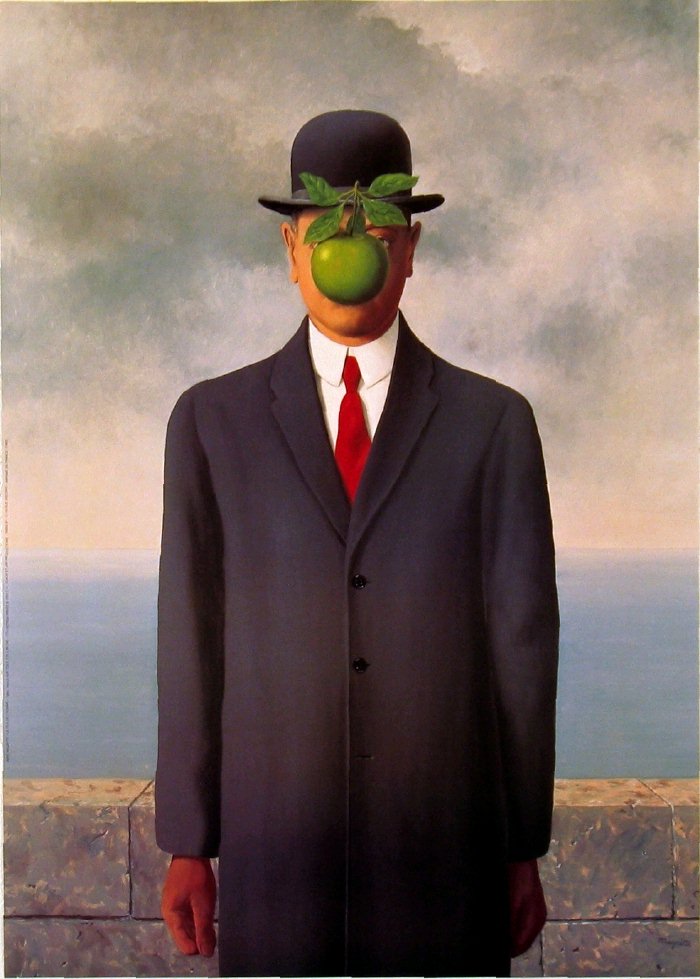
Rene Magritte (1964) The Son of Man (oil on canvas) Private Collection
Rene Magritte’s art has been used for book cover, CD covers, postcards; it has even been used in advertisements for brands like Huge Boss.  His art look familiar as almost everybody has already seen bits and pieces of his work – he is famous for using apples as a dominant feature in his paintings as well as not showing the face of the person he is drawing.

For example:

Rene Magritte (1928) The Lovers  (oil on canvas) New York: Museum of Modern Art
Creating some sense of intimacy but that being separated by the fabric covering up their heads – separation of intimacy – what did he want to say? Maybe they wanted to be lovers but weren’t allowed to be lovers? Maybe those two were a couple, maybe married but they kept things from each other that might be why there is no real intimacy. Hiding true feelings/ identities? Is there something that they are both not saying – or not allowed to say? Does is represent death?

After doing some research: Magritte’s mother drowned when he was still young and he watched her body being fished out of the river – a nightgown was covering her face. That might explain why in a lot of his paintings faces are covered up by some sort of object whether it be fabric, apples, flowers, et cetera. Magritte didn’t agree with the explanation of trying to cope with his mother’s death he only pointed out that his images were visual art of mystery/nothing/dream – Magritte wondered if people are reading too much into art – instead of just letting it be art they interpret images and sculptures.

References:

Web pages:
Bibliography:
Murray, P. And Murray, L. (1997) Dictionary of Art and Artists. Revised 7th ed. London: Penguin Group

The next exercise that I’ve been working on was the “Finding affinities” one and I have to say that it looked easy at first but when I started looking at ground plans I realised that it would be more than I thought it would be. I finally found a ground plan that satisfied me and because while reading in the big book about architecture and the International style I had laid an eye on the Villa Savoy and it was great that I found a ground plan to work with – I enjoyed looking at paintings, sculptures and furniture. This was actually the first time I actually looked into furniture a little more and I found it very interesting what I found – for example finding the Astor Hotel magazine rack was great I love the design and it fits perfectly in the living room of the Villa. What I also enjoyed was the difference between the art that was displayed in the public areas of the house e.g. foyer, living room, terrace and the difference to the paintings that were hanging in the mast bedroom and the dressing room where the paintings became more abstract and colourful. I enjoyed this exercise but I also found it quite hard as it was something where I wasn’t a 100% sure of what I was doing. But I feel like it would be great to actually see the art pieces that I chose hanging/standing in the Villa Savoy. I am actually not completely satisfied with my report about the house - that's why I am thinking about doing it again...

03 January 2012

Research point


Research point

Seurat’s painting technique: “pointillism”
-          Small distinct dots of “pure” colour (on palette, colours weren’t mixed but kept separate)
-          Blending of colour dots into various colours
-          Colours were used in system of colour wheel
-          Most paintings with pointillism technique are done with oil paint (reasons for using oil paint: thickness and because it doesn’t run down the canvas)
-          Short even brush strokes, every stroke separate from another one
 Seurat was more working-class than other Impressionist artists and although his political stance isn’t certain some speculates if he was involved with the ideas of Diversionists as this could explain why he “developed” a new painting technique that is called Divisionism/pointillism.

References:

Web pages:

I am now going to annotate a Post-Impressionist painting and I was looking forward to this annotation and I am very excited now to choose a painting. I chose Van Gogh’s “The Starry Night” and I found it very interesting to do some research on the background and look at things that Van Gogh wrote to his brother it is very fascinating to see what was going on in the mind of such a great artist. I am also still very fascinated by the fact that Van Gogh made about 800 paintings in his life time and 70 paintings within the 70 before he committed suicide.

I decided to do my virtual town house visit to Haworth Parsonage as I admire all the books that the Bronte sister wrote and I am very excited that the house where they lived can be actually visited I didn’t know that that was possible. As I am a lover of those classical novels I can’t wait to dive in to their home and see where they came up with their amazing stories on longer winter evenings. 

02 January 2012

Notes

I just finished annotating a realist image and analysing a painting of a historical event and I have to say that annotating became more fun with every image I annotated so far as I start knowing more about the background of things and for me art becomes more interesting when it transfers from Romanticism to Realism and I am about to start reading about Impressionism which is one of my favourite art periods and it is very interesting to not only get a glimpse of things and bits and pieces of art history but to actually understand the context and how one art period transferred to another one and how it was influenced by different things and how every art period also wants to express something else. It is a lot of fun doing this! I still have a hard time with reading about architecture and photography as I don’t know much about it and I mostly went to museum to see actual paintings from different art periods rather than looking at architecture and photography from back then.  

22 December 2011

Notes

I was just googling for images from Rubens to annotate one and I found a painting from Rubens that is similar to the one that I annotated yesterday when I annotated “Leda and the Swan” by Michelangelo. It is the same motive the only thing that has changed is maybe a little bit of colour and the background but the pose of Leda and the Swan was copied from Michelangelo’s version of that mythological story.

 Image from http://www.only-apartments.com/images/only-apartments/643/rubens-ausstellung-madrid.jpg (Accessed 22 Dec 20111)
 I find that very interesting that famous painters copy another ones work – I also realised that that happened quite often.
Comparing and contrasting the two annotations that I just finished:
I annotated Poussin’s “Pharaoh’s Daughter Find Baby Moses” and Ruben’s “The Three Graces” and one of the main things that I noticed is the fact of idealising the human body. In Poussin’s painting the idealisation of a woman’s or a man’s body was still obvious, the well proportioned shape of a woman’s body and the muscularity of a man’s body. In Ruben’s painting the idealised shape of a woman’s body seems to have changed to a curvier, fuller, more feminine body shape with flushed cheeks, a smile on the lips, adding all the attributes of a feminine woman. What I also noticed is that Ruben’s painting looks more natural as in the colour of the skin and the whole posture than Poussin’s. 

21 December 2011

Notes :)

The main difference between art of the Protestant north and the Catholic south can mainly be found in the choice of the image that they painted. In the Protestant north people asked for reformers e.g. Luther etc. to be portrayed, stories of the bible got a little twisted as seeing Moses receiving the Law on Mount Sinai contrasting with the infant Jesus who is carrying a cross towards the Virgin or Adam and Eve repenting their sins on which followed death – all these stories were big contrast to the art of the Catholic south where they believed that salvation could happen through faith and grace.
Today I annotated a mythological painting and first I found it quite difficult to find an image that had good quality so I could also see details of the painting. Analysing a sixteenth-century Italian painting was a fun thing to do, especially because I found the painting “Leda and the swan” by Michelangelo and I love that the use of perspective and proportion isn’t perfect as it makes the painting so much more interesting.
I also just finished reading about Baroque and I have to say that reflecting on my reading – I am better without taking notes but underlining in the actual book, taking notes if necessary on the side and just highlighting the most important words and sentences. This works for me so far and I learned so many things over the last 3 weeks and just thinking about it makes me proud. I am a full time student and I don’t just have 8 hours per week I almost spend 8 hours a day studying so I am kind of flying through the course. I love doing extra research on things that interest me and sometimes I just forget to put it in my learning log but it is good for my individual learning and I feel like sometimes it gives me great background information and because I am a detail person I really enjoy studying like this. 

20 December 2011

Research point: Mythology and art

I feel great that art history comes so easily to me – I have lots of fun and I enjoy reading about it and researching about it. I think the independent research is one of my favourite parts of the course plus I love making sketches and drawings of things. I like getting different books from the library and read in them, look at the images of paintings they show and how I understand things better sometimes when I have two different sources.
So today I am going to research stories behind mythological themed paintings and I am excited to see how the same story was expressed in a different way by various artists.

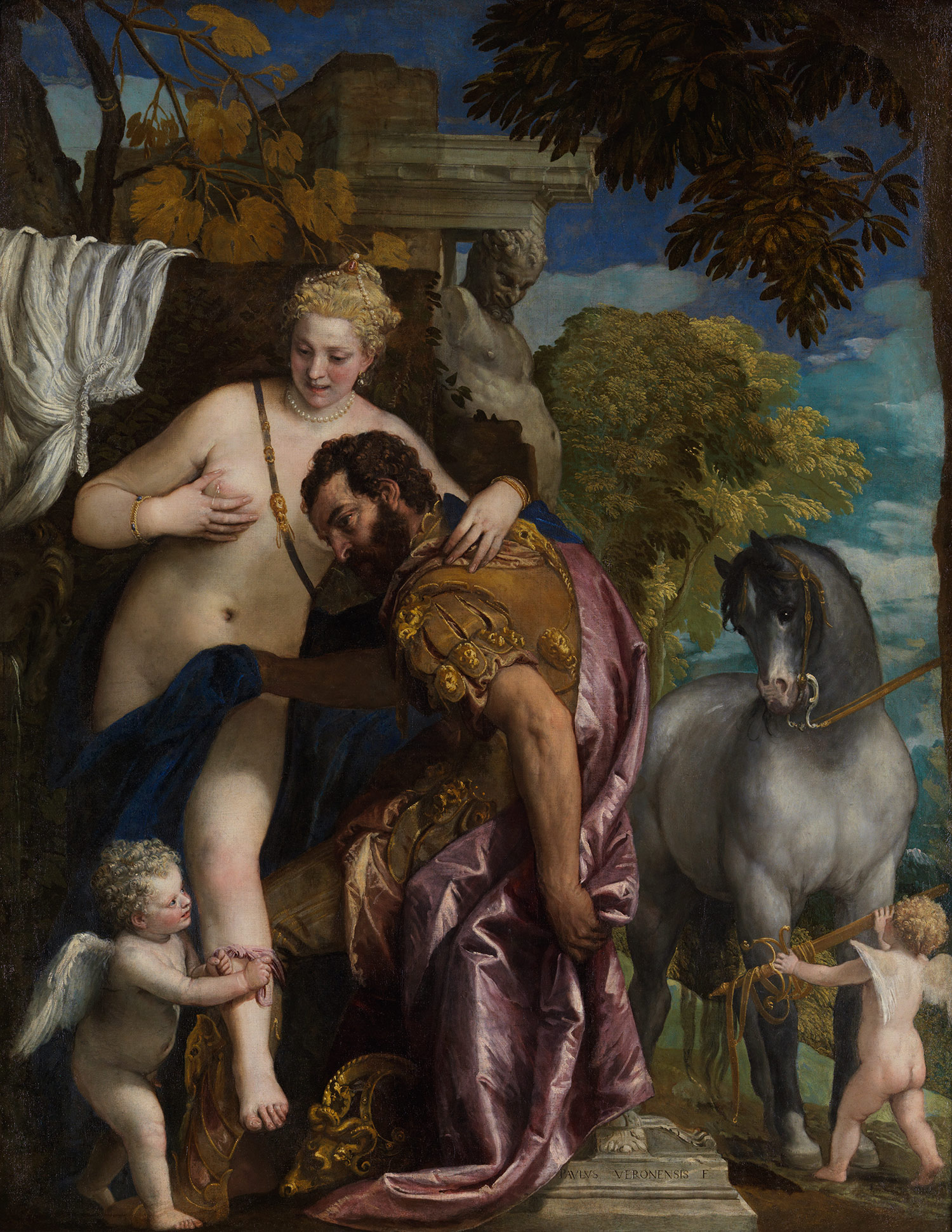
 “Mars and Venus United by Love” (1570s) by Paolo Veronese
                 
                                                                                                     
Image from http://www.metmuseum.org/toah/images/h2/h2_10.189.jpg (Accessed 20 Dec 2011) 

It shows cupid tying something around Venus and Mars leg, uniting her and Mars in love. It might represent and show “Chastity transformed by Love into Charity” (http://www.wga.hu/frames-.html?/html/v/veronese/10/index.html)
The image shows that Mars is wearing a cloak as men did in the Roman Empire. The story behind the painting originates from Homer’s Odyssey (266-369) where Mars gave many presents to Venus (see pearl necklaces, jewellery), but Venus was married to Vulcan and Vulcan got angry and made Mars and Venus a trap so if they were going to see each other again they were going to get caught in a net and then he could catch them united by love. After the gods came together to talk about what to do about it they let Mars and Venus free and they both went separate ways to different areas.

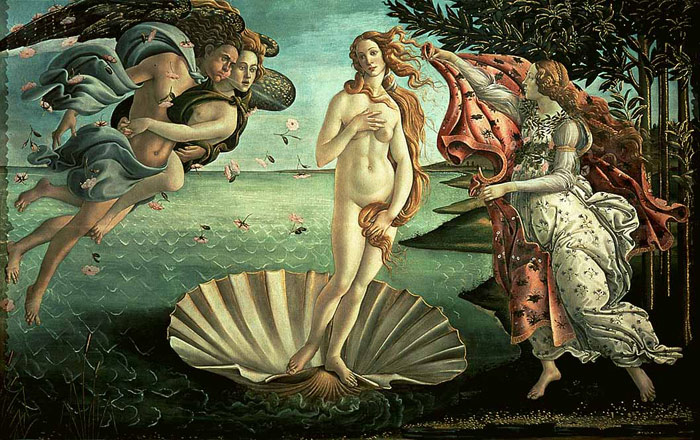
“The Birth of Venus” (1485) by Sandro Botticelli


The mythological story behind this painting stems from Greek mythology where Venus (Aphrodite) emerged from the sea as a full grown woman.
Thinking about how these 2 mythological stories might have been of use to promote Christian values:
-          Venus stands for fertility, chastity before marriage, love, sensuality
à promoting the Christian value of chastity before marriage, fertility

 “The Birth of Venus” (1879) by William-Adolphe Bouguereau


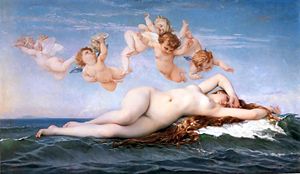
“The Birth of Venus” (1863) by Alexandre Cabanel


Both paintings show a portrait of a nude woman with long hair with an idealised body (proportion etc.) emerging from the sea and surrounded by angels. One of the biggest differences is the pose of Venus as in Bouguereau’s painting Venus is standing in a sea shell (symbolising a woman’s vulva) and in its design it very similar to Sandro Botticelli’s Venus 400 years earlier. Cabanel’s Venus is laying in a sea shell and she looks like she is in a state of dreaming and being awake maybe listening to the angels singing. What is also important to notice is that Bouguereau’s Venus is surrounded by more figures than Cabanel’s. Cabanel might have wanted to copy parts of the original, traditional, typical birth of Venus from Botticelli and revive the traditional way of portaying Venus, Bouguereau thought about giving Venus another look/pose/gesture to make another aspect of her being obvious.

References:

Web pages:

http://en.wikipedia.org/wiki/The_Birth_of_Venus_(Bouguereau)

19 December 2011

Albrecht Dürer

Albrecht Dürer
I went to the library today and I found a book about Albrecht Dürer. I got interested in his work and in his life while reading the 10th Chapter about Pre-Renaissance and humanism. I started reading this book tonight and I am just very fascinated by his life. First because he was one of the first artist to make accurate, detailed self portraits of himself throughout his life, second because his work shows the individuality of a person and other than just showing the look of a person and how other people viewed them he rather focused on the expression of the feelings, soul-like expressions in the portayed person’s face and gesture.
He described himself as melancholic and sometimes it showed in his art. Today we know a lot about him as he portrayed himself often and he kept a diary throughout his life with sketches, texts, things he observed while travelling and paintings of his own. He was born as the 3rd of 18 children (21 May 1471), his father was a goldsmith and as it was common at that time Albrecht Dürer started working in his father’s shop during his teenage years. The first self portrait that is known is from when Dürer was about 12 years old. His father saw his talent and Dürer studied under the artist Michael Wolgemut for three years until he was 18. He developed his skills not only in painting and sketching but also studied xylography (woodcarving). After finishing his studies he traveled for 4 years unfortunately there are no detailed documents about where he traveled but it is possible that he went to the Netherlands and throughout Germany.
Documents found about Dürer describe him as very charming, fond of traveling, open to new places and people, very religious; an ingenious, adroit good looking man. He married a goldsmith’s daughter when he was 23 years old and he had a quiet family life – the only source of information about his family life comes from a “family chronic” that he published himself.
He also went to study Renaissance and Humanism in Italy, he was under great influence of Giovanni Bellini and Giorgione and during his time travelling through Italy he learned about the importance of perspective and proportion. Dürer was finally able to live his passion. Most artists during the Renaissance set themselves to a specific type of painting or subject that they painted, but Dürer did all kinds of things although portraits seem to have been his favourite. Instead of just capturing the uglyness or beauty he wanted to capture their inner world, their feelings, their soul, the pressure that they felt inside, their passions and secrets, he tried to capture what was for most people unseen.
Some of his most famous work include portraits of himself and different people, Mary with child or without child paintings, printmaking and Adam and Eve.
Albrecht Dürer died in 1528.  
References:
Bibliography:
Stefano Zuffi, Albrecht Dürer, DuMont Buchverlag, Köln, 1998

Visit an art gallery

Yesterday I visited an art gallery and it was really interesting to see how much I already learned during this short period of time. I mean I could identify some of the paintings and what century they might be from and what art style they were. I also saw another painting of a Saint painting Viring with child as in the image that I annotate from Jan van Eyck and I got really excited that I knew some things to say about to my father who accompanied me. I also saw this one really amazing painting and I stood in front of it for probably 20 minutes because I was so fascinated by what it meant in a deeper sense. It was a painting from Franz Radziwill (1895 – 1983) and it was called “The Strike” (1931)


and although the LWL – Landesmuseum für Kunst und Kulturgeschichte is quite a small museum and gallery compared to for example the National Gallery in London or Galleries in Australia, they had many amazing paintings and I got a lot from visiting an art gallery and writing about how the building and everything fit together with the art that was shown. I researched something about this painting after I got back and it was very interesting to read about it what it meant and of course about the artist himself as this often gives some kind of hint about what the painting could mean. Franz Radziwill orientated himself at other expressionist paintings but within his career his style changed to a more subtle style and his paintings were the new version of German romanticism. This painting shows an empty city, it shows a coffin, empty railtrails, airplanes, empty streets, etc. Franz Radziwill wasn’t a big fan of realism he maybe wanted people to pay more attention to the things behind reality, to the things behind the business of the world and to get the viewer to increase his/her awareness of the things that aren’t obvious or that one doesn’t see in everyday life. What is also interesting is that some of the details that can be seen on this painting were added later after finishing the painting in 1931. I think that this painting is amazing as I could find a lot of different ways to interpret all the small details that are shown in this painting.
References:
Web pages:
I also got a few postcards of different works of art in the museum shop and I am very happy that I found a place where I can buy postcards that show paintings different art periods as I found it hard to find any shops that sell those close to where I live. I am still very excited that I was allowed to touch (!) a Henry Moore sculpture yesterday; it was really fantastic and it felt great touching the cold bronze surface and feel the shape of the sculpture flowing underneath my hands. I was also able to spin the sculpture as it was only a small one on a disc and it was great to see the sculpture from all different sides and angles. I am eager to write a report about my museum visit now and order all the information that I stored in my head and took notes about.
What I want to take a look at also today is Chapter Eleven about the 16th century in Europe. I have been looking forward to the second part of the course as I feel like my interest is more in the art from 14th century onward. I am also thinking about watching the episode about Northern Renaissance from the “Art of the Western World” series.
Watching the video made me remember all the details about what I learned during the last project of part 1 and I am eager to read about the 16th century now. I finished reading about the High Renaissance in Europe and I just find it very interesting and I can’t wait to research some things and learn more about the stories behind the painting as in the research point about researching the mythology behind three paintings – I am looking forward to that, that is going to be interesting!

15 December 2011

Notes about finishing the first part of the course

I finished reading about the fifteenth century in Europe last night and I loved reading about Dürer as I always admired his self portrait, I mean we did that in high school and it is not easy at all and I feel like Dürer even brought his own character into it and not just painted his face, idealising his features, I mean we cannot be sure about that but I feel that what Dürer said and wrote in his life time reflects in his paintings – honesty, individuality and being a true master of art. Jan Van Eyck was another artist who did amazing work and all the details in his paintings, it’s incredible, for example that we as the spectator can look underneath Adam’s foot in his painting „Adam and Eve“, and I love how he made people look real with the colour of their skin tone and the setting in which he showed people. What is also very interesting is that oil colours were ‘‘invented“  and artists started using it instead of the very fast drying paint tempera which dried within minutes, the oil paint gave the artist the opportunity to work slowly, built colour up, work on the details instead of rushing over the painting, needing to idealise the body or face. What is also very interesting for me is that Jan Van Eyck used not only linear perspective but also aerial perspective which meant to let things in the background fate away and paint them in a more translucent way and made his paintings look very naturalistic and realistic. What is also said about Van Eyck is that his paintings had a "unique jewel-like quality" (p. 425, Honour&Flemming, A World History of Art, Lauren King Publishing, London, 2009).
Today I am going to annotate a Renaissance image and I was looking forward to this exercise as I am very fond of Renaissance paintings and art, it was my favourite section in the Galleria degli Uffizi and I found greatest pleasure in taking my time to look at every detail of a painting. It’s been a few years since I’ve been there but what was said about Van Eyck’s painting that they had a jewel-like quality I feel like a few paintings actually have that glow from within from the Renaissance time and I wonder if it is just the use of specific pigments in the colour they mixed.
I’ve just finished the developed annotation of an image and I chose the one that I annotated for a Renaissance image as it was the most interesting one to annotate for me so far.
I sometimes find it hard to analyse works of art using the internet, books, postcards et cetera because I am not able to actually see the brush strokes or go closer to the painting to see more detail, I rely on the quality of an image and if I am lucky I can find a very good quality of an image online which allows me to zoom into the picture. As I am living in a rural area I have to think about the original works of art that I’ve seen in the past when travelling to Italy, London, Australia, etc.
What I also find very interesting is to see how the techniques developed over the centuries and how some things stayed the same and how people valued the same. In ancient Greek when they started to make sculptures more naturalistic in their movement and how in Roman times they carried that on and how in early Renaissance painters and artists go further and paint people without idealising the people shown in their paintings. I also find it very interesting how the paintings, sculptures developed as far as what they show. In ancient Greek and Rome there are still lots of images of gods and the stories about gods and emperors, through bringing Christianity into the mix people started painting saints and stories from the bible. Some things survived through all the centuries for example showing of astrological signs in paintings or sculptures. Also showing gods or saints has the same roots, people want to tell the story of their “religion” or what they believe in.
I feel like in late Renaissance in the time when Dürer became more famous the expressions of individuality and expressing one’s own perception of things became more and more although still scenes from the bible or saints or Madonna with child were the images that were portrayed a lot.
It was very interesting to learn about all these things and I feel like I know have a better understanding of art today already – seeing how painting techniques or inventions like oil colours still affect people’s lives and how a lot of artists use oil colours for the same reason as people did back then. Or the discovery of linear and aerial perspective is such a great thing for everybody today, it is almost normal to learn it in art class in school. 

14 December 2011

Research point: Linear perspective


I am starting today with watching the Art of the Western World Episode 3+4 and I hope that they will give me another great summary of all the things I’ve learnt over the past few days. I honestly didn’t find this chapter very interesting as I’ve learned a lot about Gothic architecture and art in high school and I felt like is just not my field of special interest. I am now eager to move on to Early Renaissance as I really admire the paintings of the Renaissance artists like Dürer and others. And I’ve been to Italy quite a few times and I have seen a lot of original works so this makes me extra excited. It is supposed to be the century of the Medici and I am excited if I am going to read something about them too or if there are other more important things.
I just finished reading the first few pages of “The Fifteenth Century in Europe” (A World History of Art) and I am now at the research point and back in school I’ve always enjoyed making linear perspective drawings/sketches. After reading and researching about it again I feel like discovering, inventing the linear perspective is a very important thing in art – otherwise art today would be so different and maybe we would still search for the special something, the thing that makes our paintings, drawings look more real.


12 December 2011

Reading a lot!

Today I am going to start reading about Religious art. Last week I went to the library and got a book about Christian art and I’ve read in it over the weekend and I though it was really interesting. It’s not just all about the history of it but about the symbols that appear in different religious art pieces. It is kind of like a dictionary of Christian art and I think that I am going to find it helpful for annotating images.

Notes/ things that interest me and got my attention while reading Chapter 9 “Medieval Christendom” (World Art of History, 2009):
-          The book just talks about acoustic and how well the stone echoes the singer – it’s an amazing thing – almost every church I’ve been in in my life has this great acoutisc and a single stone vault and I think it’s great how it all began such a long time ago; and it’s the same with the little chapel and altar enclosed to the single stone vault so a few priests could say mass at the same time – it’s in almost every church these days unless it’s only a small one then not but the ones we call classical or of extreme beauty they all have that
-          “Dignified” is such a perfect word to describe Romanesque style – I always wondered what that word was and the feeling you get when you enter such building
-          “Romanesque portal” – the entrance of a church (where every person entering the church would enterd under the all-seeing judge), Christ was always shown in the middle and the other men/women shown around him were much smaller, favourite subject to portray was the Last Judgement
-          Architecture wise they developed two different styles: the tunnel and the transverse (series of tunnel vaults places transversely) and then they started combining the two and made a new style called “Groin” vaults
-          Rib vaults were practically easier to built than Groin vaults as they were built first as the supporters of the rest of the building instead of being built after the rest of the building which made the construction with the Groin vaults much more complicated + rib vaults also had aesthetic reasons why architects started using them instead of Groin vaults because it Rib vaults let in more light and it took of the forbidding appearance that the darkness and sterness gave the older buildings
-           St Denis was the first church built in the Gothic style (around 1144 AD)
-          Churches with a lot of stained glass had extra support to make the building stable; it was called “flying buttresses” and were built outside of the building and stabilised the few columns on the inside
-          English and German architects developed the Gothic style further and especially Germany expanded scale and richness of detail (Cologne Cathedral was one of the tallest and longest Gothic churches although it was finished in 1880 after 600 years taking to complete it)

08 December 2011

Notes about "Art of the Western World"

Today I am going to start with watching “Art of the Western World” episode 2, cause I feel like starting my day yesterday with episode 1 about the Greek – helped me to get back into the topic and I really appreciate it.

Notes “Imperial Stone – The Art of Rome”:
-          Rome gave western world practical legacy à architecture
-          They didn’t show glorification of war – but showed it the way it was: brutal
-          Arch was revolutionary
-          New conception of architecture of inside architecture – more space
-          New building material – concrete – made all the great architecture possible
-          Colosseum seems to be the expression of greatness that all Emperor were longing for
-          Bricks had most of the time some sort of signature from who it was built in them
-          The Pantheon was the world’s largest Dome for over 18 centuries  (and is the only one that survived)
-          Greeks gave the western world the incredible architecture for the outside – and the Romans gave the harmonious way of building the inside (lofty, spacious)
-          The Pantheon was Paegon temple and Christian church
-          Roman sculpture: used to decorate public places, decorate the amphora, palaces, gardens,
                                 museums; Greek sculptures have “survived” as Roman copies; Roman
                                 portrait busts
-          To honour Constantine architectures built one of the last triumph arches in Rome


I was able to visit Rome in summer 2011 and I was very impressed by the triumph arch – all the detailed work in frieze and the numerous people that the artist carved into the stone. I didn’t know much about the history of it but I thought it must be some kind of monument for someone, but I didn’t know for who – so this is very interesting to finally know who it was built for – Constantine who also legalized Christianity.

I also visited the Colosseum of course and even I was kind of speechless standing in front of this amazing piece of architecture – and I just wonder what the people of the Roman empire must have thought when it was finally finished and they saw it for the first time. It must have been a little bit like a shock about its giant size. I also didn’t know much about what they showed inside of the Colosseum, I was sure that it was some kind of Gladiator kind of thing but I didn’t know that the Gladiators mostly were slaves, criminals condemned to death or prisoners of war who had no rights in Rome. Just from the first century AD free men started choosing fighting as their profession and trained hard to become Gladiators.


I also had the pleasure to visit the Vatican Museum and I was very excited about the architecture – just walking through the rooms looking up and seeing all these amazing details painted, carved into the ceiling was a great feeling. I am always very excited to think about the fact that I am walking through history that maybe a lot of important people have looked at it just like I did and for me going to a historical place also feels like connecting with art in another way. Of course it was very crowded in the Vatican Museum which meant that I didn’t have much time to look at things in detail so I just enjoyed the inspiring atmosphere of the place and listened to some interesting stories that I heard from people’s guided tours. I especially loved the circular room – it was beautiful and like the Pantheon there was light coming in from a small window at the top – connecting the normal world to heaven – it was wonderful!


 Web pages:

06 December 2011

Adding more information to "Visit a classical building"

After a day of letting it all sink in I received an E-Mail this  morning from the spa park as I requested more information about the “Wandelhalle”. Now I want to add some more things and more details about the architecture and how it changed from back in the early days to now. When it was first built it was much bigger than it is now and it had more details inside e.g. wall paintings et cetera. When it was first built in 1926 there were two over life size nymphs as a wall painting inside next to the bassin like sinks. Of course those wall paintings got a lot of attention and negative critic as it was much too nude for that time period. And after 12 years the paint started cracking of the wall so it ended up being over painted. From 1960 to 1962 the rebuilding began and the archtitect decided to built an extra hall at the back of the “Wandelhalle” to later be used as an art gallery.

In 1998 the government of the town Bad Oeynhausen decided that they wanted to start going back to the first simple design so they got rid off the art gallery and in 2002 the architect Prof. Christoph Mäckler started the restoring of the original building. Only slight improvements material wise and a few more details were the only things that were added to the original building.

In the brochure I found some great pictures of the "Wandelhalle" of the way it used to look like. Unfortunatley I don't know how to insert only the picture instead of the whole brochure. But what I could find was this really amazing photo from the 1920-1930's showing the view from the "Wandelhalle" and I just love the composition of this picture - old pictures are just fascinating to me! 


Image from http://static2.akpool.de/images/cards/29/295788.jpg (Accessed Dec 6 2011)


03 December 2011

Research: Greek art periods + architecture orders

After reading a lot about ancient Greek art I couldn’t fall asleep and thought more about the different periods within ancient Greek art and for me to understand better I felt like I needed some kind of organised system to document the most important facts about those periods so I came up with the idea to make a table to bring some structure in my new knowledge.
Period
Sculpture
Architecture
Relief
Geometric
(1000 BC – no real knowledge about this period because of the war when most art got destroyed)
-
-
-
Archaic
(7th – 5th century BC)
Attributes: standing male nude: head held high, eyes to front, arms hanging down the sides, hands forming fists, one leg a little in front of the other, athletic figure, showing strength in muscles, hard knee cap, round thighs, facial expressions: witty, knowledge, slight smile, impassive, pert (Example: Kouros c. 570 BC); standing clothed female (Example: Kore c. 510 BC); seated female

“black-figure”:
Most of the time they showed silhouettes picked with red lines, eyes always had to be shown frontally even when figure was portrait from profile
“red-figure”:
Showing more than silhouettes because painting on red with black, making characters visible, more variety (Example: Exekias 540 – 530 BC)
Classical
(5th – 4th century BC)
Attributes: poses became naturalistic, showing some kind of movement, more “action”, artists started to explore, face seems expressionless, clear-cut outline, typical Greek profile (Example: Charioteer c. 478 – 474 BC)
Parthenon
Attributes: “bold in outline, delicate in detail, majestically imposing” (World of Art History, 2009), show off for wealth and power, Doric style for columns (e.g. practical style of stone on stone without particular details in design), optical refinements
Parthenon frieze (447-432 BC)
Attributes: showing mainly war scenes
Hellenistic
(4th – 1st century BC)
Attributes: sculptures started looking more real, if cloth was involved it looked very real, artists started changing reproducing the human form into translating the human form as an ideal form to a sculpture, more detailed than before
+ first female nude of goddess Aphrodite
Theater Epidaurus begun c. 350 BC
Attributes: Pure geometric form, simple, regularised earliest type of theatre – but columns became more and more detailed (see different architecture styles page 5)


Web pages:

Different architecture orders during Ancient Greek architecture

Doric order:

-          Pretty simple
-          Stone architecture – blocks resting on each other without mortal
-          Following the natural shape of a tree trunk (origin in wooden architecture)
Image from http://en.wikipedia.org/wiki/File:DoricParthenon.jpg (Accessed 3 Dec 2011)

Ionic order:

-          Main part as simple as Doric order (origin in wooden architecture)
-          Decorated with volutes or ornaments

          
Corinthian Order:

-          Origin not in wooden architecture
-          Came from Ionic order in mid 5th century BC
-          Capital is formed like a large krater
-          Capital was ornamented with double row of leaves, roses growing out of them
                                    
Web pages:
Today I was also looking at some images that I could use for my first image to annotate and I visited the Bridgeman Education Library for the first time and thought it was a great source for all kinds of art – I love it! I searched for Greek art and I found a lot of sculptures that I would love to annotate – now I just have to decide which one I like – I am really interested in female sculptures so I am probably going to choose a female sculpture.  I am also planning my visit to a classical building. I looked for a neo-classical building online around the place I live and it was very hard to find one – most of them are in Munich or Berlin which is about 6-7 hours drive for me so I looked for something closer to my home and I found one building which is very neo-classical and I am excited to go there and look at all the classical architecture features. There isn’t a lot of information to fin about that place. It’s called “Wandelhalle” and it is located in a city about an hour from here. I don’t think I can go inside but I hope that I will get a lot from it anyway with just looking and analysing it from the outside – there are lots of pictures of the inside to find on the internet. I hope the weather is going to be better soon – so I can go and visit my first building.